
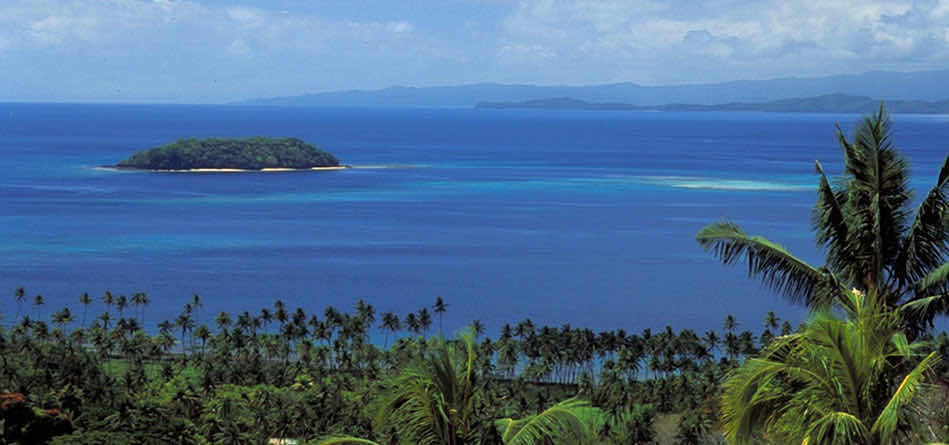
When most people think of Fiji, they picture Denarau Island. Resort pools, swim-up bars, the familiar luxury of somewhere that’s been designed to be comfortable and unchallenging.
That Fiji exists. But there’s another Fiji — one that takes a little more intention to reach, and rewards you in ways that no resort strip ever could. That Fiji is Taveuni.
The Garden Island
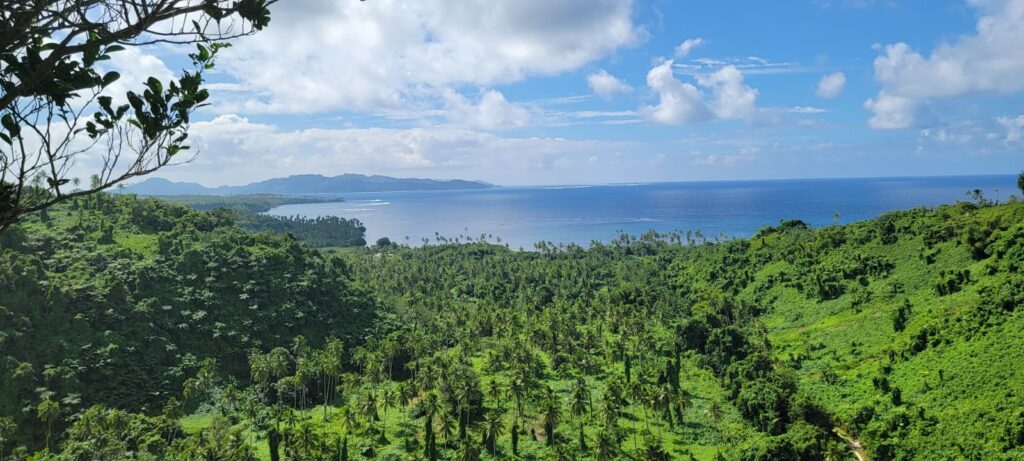
Taveuni is Fiji’s third-largest island, and its most extraordinary. Known as the Garden Island, it sits just south of Vanua Levu across the Somosomo Strait — a volcanic island 42 kilometres long, rising to over 1,200 metres, draped in some of the most dramatic tropical vegetation anywhere in the Pacific.
Unlike the main island of Viti Levu, the mongoose was never introduced to Taveuni. As a result, the birds and wildlife that were wiped out elsewhere in Fiji still thrive here. The rare orange dove — one of the most vividly coloured birds in the world — the silktail, the barking pigeon and the Fijian banded iguana all flourish on Taveuni in numbers that draw naturalists and birdwatchers from around the globe.
High in the island’s interior, around Lake Tagimoucia, grows the Tagimoucia — Fiji’s national flower, a spectacular red and white bloom found nowhere else on earth.
Bouma National Heritage Park
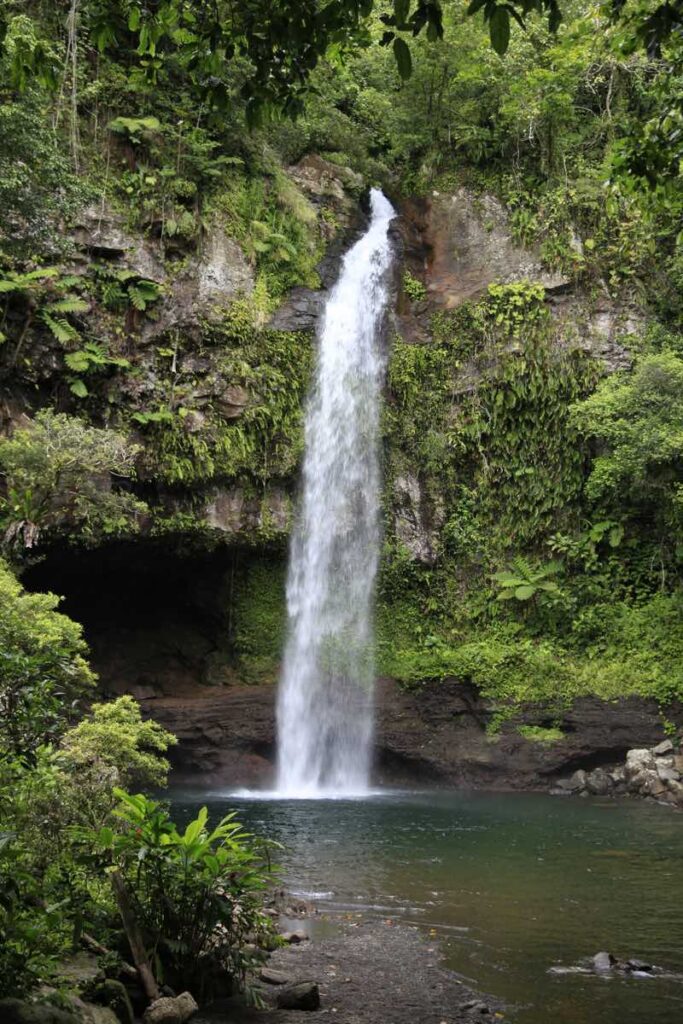
More than a third of Taveuni is protected within the Bouma National Heritage Park, one of the most significant conservation areas in the Pacific. Three spectacular waterfalls — the Tavoro Falls — cascade through ancient rainforest into crystal-clear natural swimming pools. The first is a gentle ten-minute walk from the visitor centre; the second and third reward a longer hike with bigger pools, panoramic views and the kind of solitude that is increasingly rare anywhere on the planet.
Three spectacular waterfalls cascade through virgin rainforest into crystal-clear natural pools — the first accessible via a gentle ten-minute walk from the visitor centre, the second and third requiring more ambition and rewarding it proportionally with larger pools, sweeping views and virtually no other visitors.
The Lavena Coastal Walk
On the southern side of Taveuni, the Lavena Coastal Walk is one of the most rewarding half-day hikes in all of Fiji — and one of the least crowded. The trail begins at Lavena Village, a small, welcoming community on the island’s remote south-eastern coast, where a modest entry fee goes directly to the village trust.
From the village, the path winds south for five kilometres along a coastline that most visitors to Fiji never see. The trail passes through traditional village gardens thick with taro, breadfruit and banana, along volcanic black sand beaches fringed by coconut palms, and over rocky headlands with cliff-top views across the ocean. It is wild, quiet and genuinely beautiful.
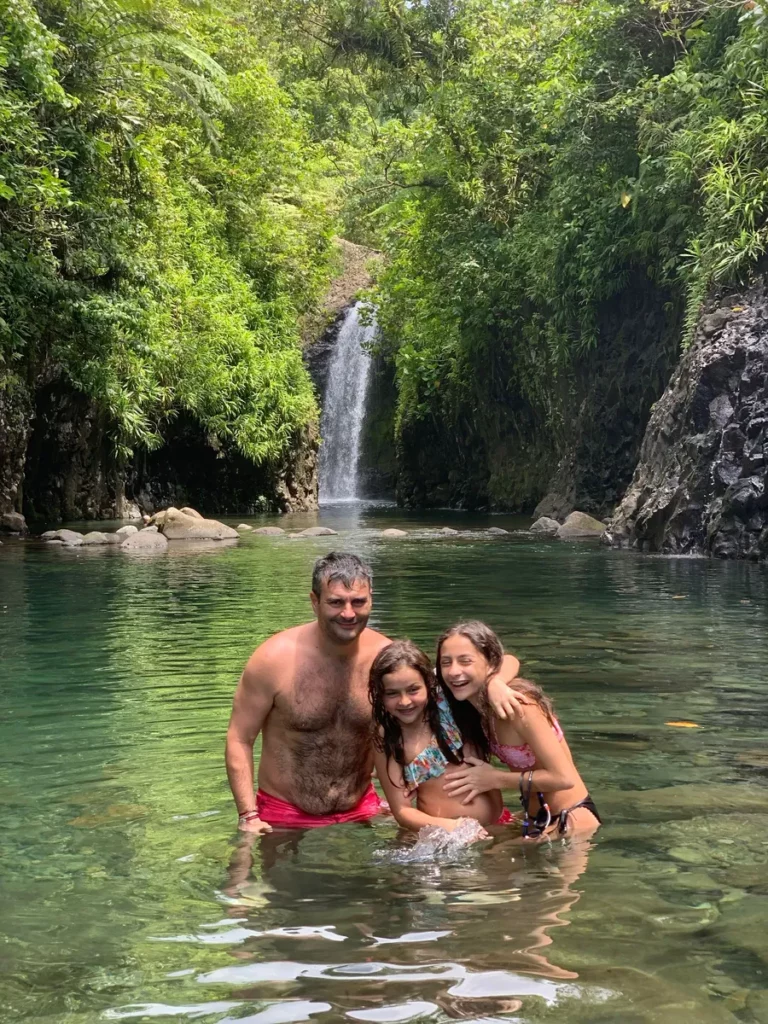
The walk ends at Wainibau Waterfall, where a river cascades directly into the sea through a steep-walled gorge. To reach the falls themselves, you wade into the river and swim the final fifty metres through the gorge — the water cool and clear, the walls rising on either side. It is one of those rare travel moments that exceeds every expectation.
Allow around four to five hours for the return walk, wear good footwear and bring water. Your Taveuni Palms team will arrange private transport and a guide, and can pack a lunch from the villa kitchen to enjoy on the hike.
This is the Fiji that doesn’t appear in the brochures. The one you have to go looking for.
World-Class Diving. Right Here.
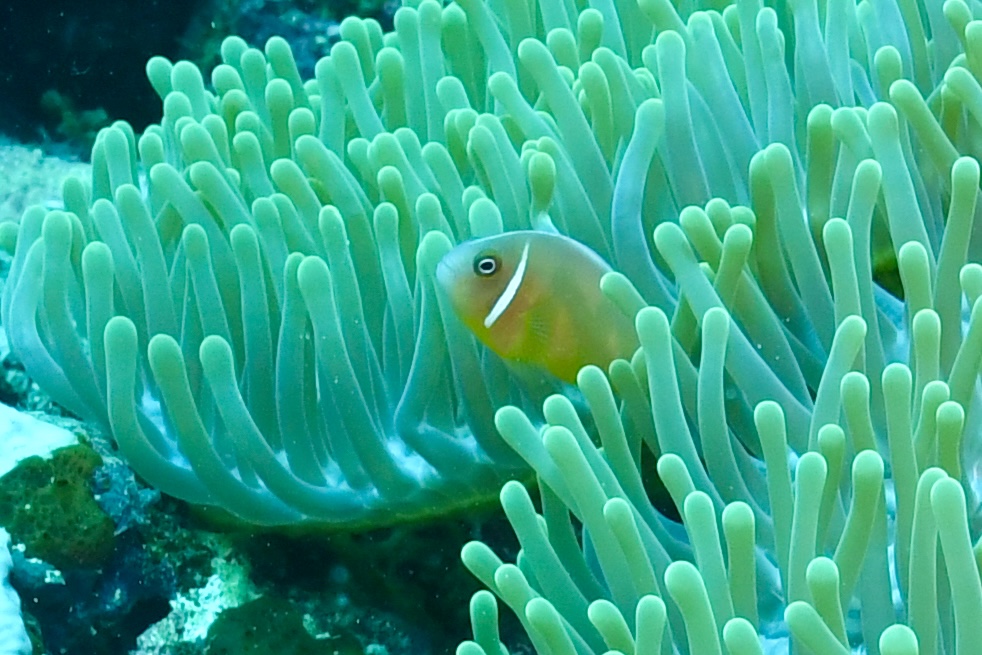
The Somosomo Strait separating Taveuni from Vanua Levu is home to Rainbow Reef — widely regarded as the soft coral capital of the world and consistently listed among the top 10 dive sites on the planet. Over 25 dive sites, including the extraordinary Great White Wall, attract divers from around the world who make the specific journey to Taveuni to experience them.
Rainbow Reef sees a fraction of the diver traffic that comparable sites in the Mamanucas receive. That selectivity is one of the things that makes it so special. Experienced and novice divers rate their dives on the Rainbow Reef as the highlight of their vacation and the best they have seen in the world. This is why Taveuni Palms is delighted to have so many divers return each year to dive and explore the reef.
Dolphins, Whales and Manta Rays
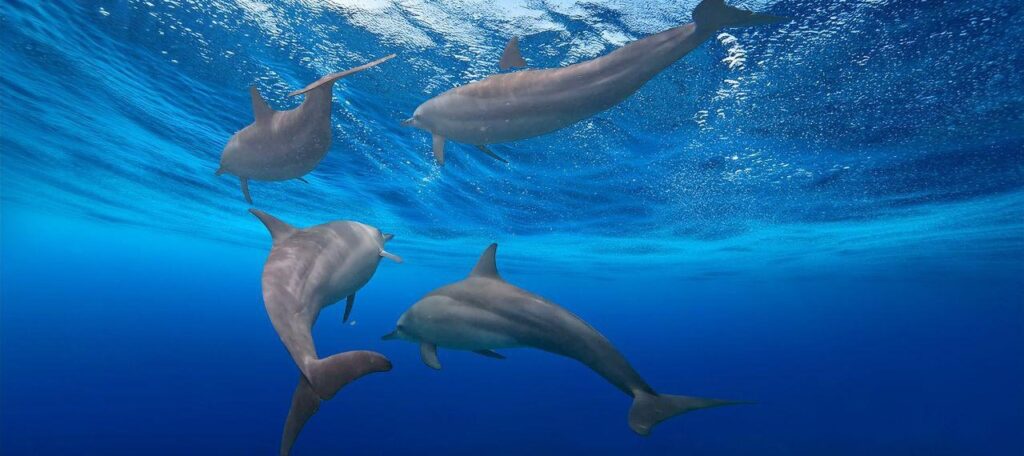
Spinner dolphins are a regular presence in the Somosomo Strait — often visible from the villas at Taveuni Palms, passing in pods in front of the beach. Between June and October, humpback whales move through the channel. Manta rays feed on the plankton-rich currents between March and November, with July to September the most reliable window.
Unspoiled By Design
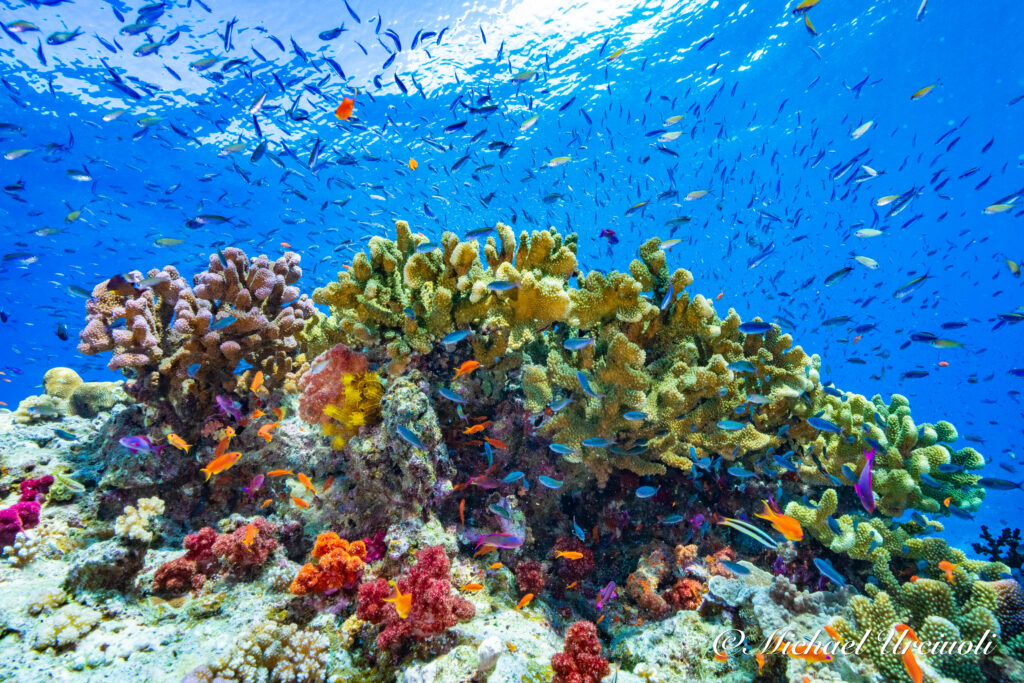
Taveuni has no large resort chains, no shopping malls, no tourist strip. Approximately 80% of the island’s remaining tropical rainforest is under government protection. The island’s population of around 12,000 people live largely in small communities across the island, maintaining a way of life that feels genuinely authentic.
What Taveuni has is an extraordinary nature, warm and genuine Fijian culture, the world’s best soft coral diving, some of the Pacific’s most productive game fishing waters, and a pace of life that slows down to something deeply restoring.
Taveuni is Fiji the way it was always meant to be — wilder, greener and more extraordinary than anywhere else in the archipelago.