
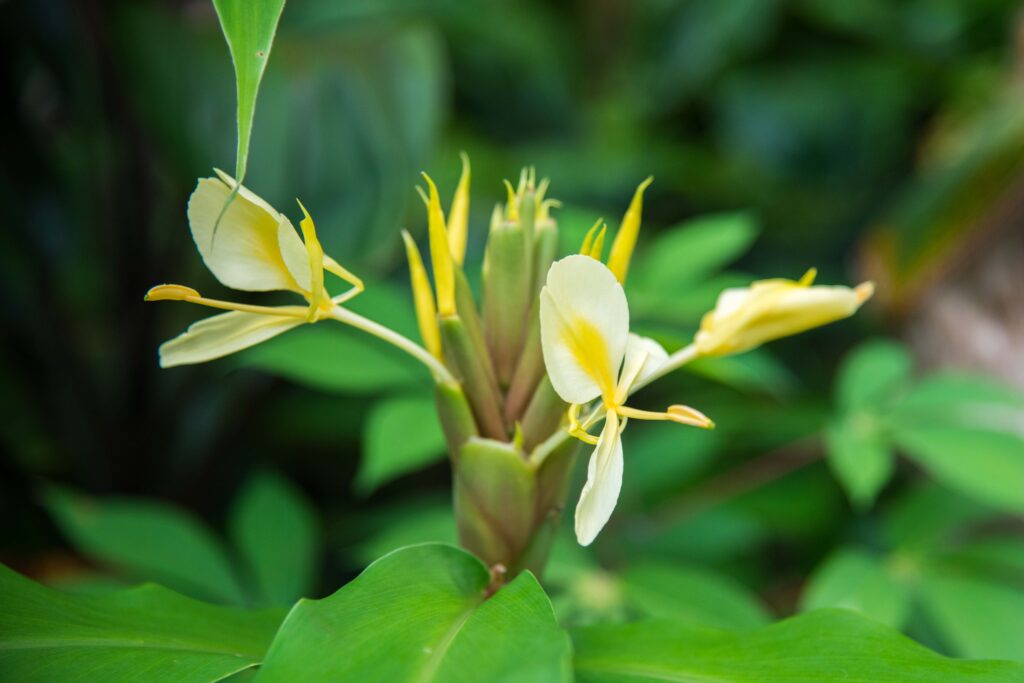
Taveuni, Fiji’s third-largest island, has earned its enchanting nickname “The Garden Island” through centuries of lush, unbridled growth. Located in the northern part of the Fijian archipelago, this volcanic island is a living testament to nature’s creativity, where mist-strouded mountains give way to dense rainforest, and coral reefs teem with life just offshore. For nature enthusiasts, botanists, and wildlife lovers, Taveuni represents one of the South Pacific’s most remarkable natural laboraties.
A Volcanic Foundation for Life
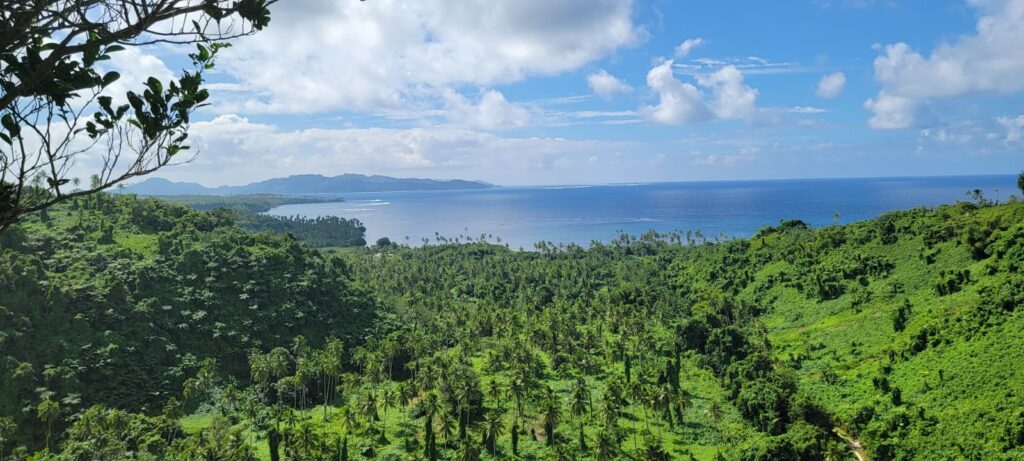
Taveuni’s extraordinary biodiversity stems from its volcanic origins. The island’s fertile volcanic soil, combined with abundant rainfall (some areas receive over 10 meters annually), creates perfect conditions for plant life to flourish. The island’s relatively young geological age means its ecosystems are still evolving, offering scientists unique opportunities to observe ecological processes in action.
The island’s topography ranges from sea level to the summit of Des Voeux Peak at 1,195 meters, creating multiple microclimates and ecological zones. This vertical diversity allows species adapted to different conditions to coexist on a relatively small landmass of just 470 square kilometres.
The Rainforest Cathedral
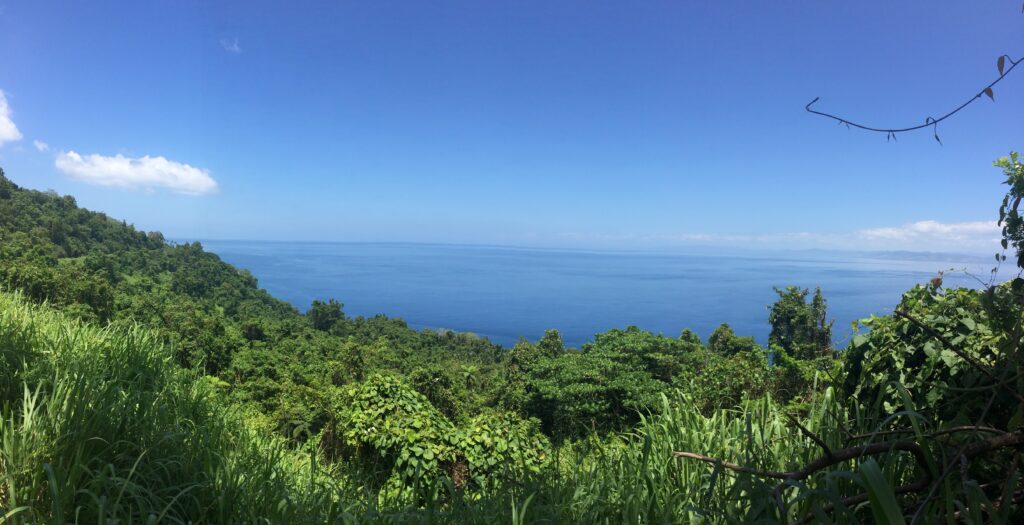
Taveuni’s rainforests are nothing short of spectacular. Walking through these ancient forests feels like entering a green cathedral, where massive trees form a canopy that filters sunlight into ethereal beams. The island hosts some of Fiji’s last remaining stands of old-growth rainforest, ecosystems that have largely disappeared elsewhere in the Pacific.
Among the forest giants, you’ll find towering dakua trees (Agathis macrophylla), Fiji’s native kauri pine, which can reach heights of 40 meters. These magnificent trees have supported Fijian communities for generations, though logging has significantly reduced their numbers. In Taveuni’s protected areas, these giants still stand, some hundreds of years old, their massive trunks supporting entire ecosystems of epiphytes, mosses, and fungi.
The undergrowth tells its own story of adaptation and survival. Tree ferns unfurl their prehistoric fronds in the shadowy understory, while vines and lianas create living curtains between trees. Walking through these forests, you’re never far from the sound of dripping water, as the rainforest acts like a massive sponge, absorbing and slowly releasing the island’s abundant rainfall.
Endemic Treasures
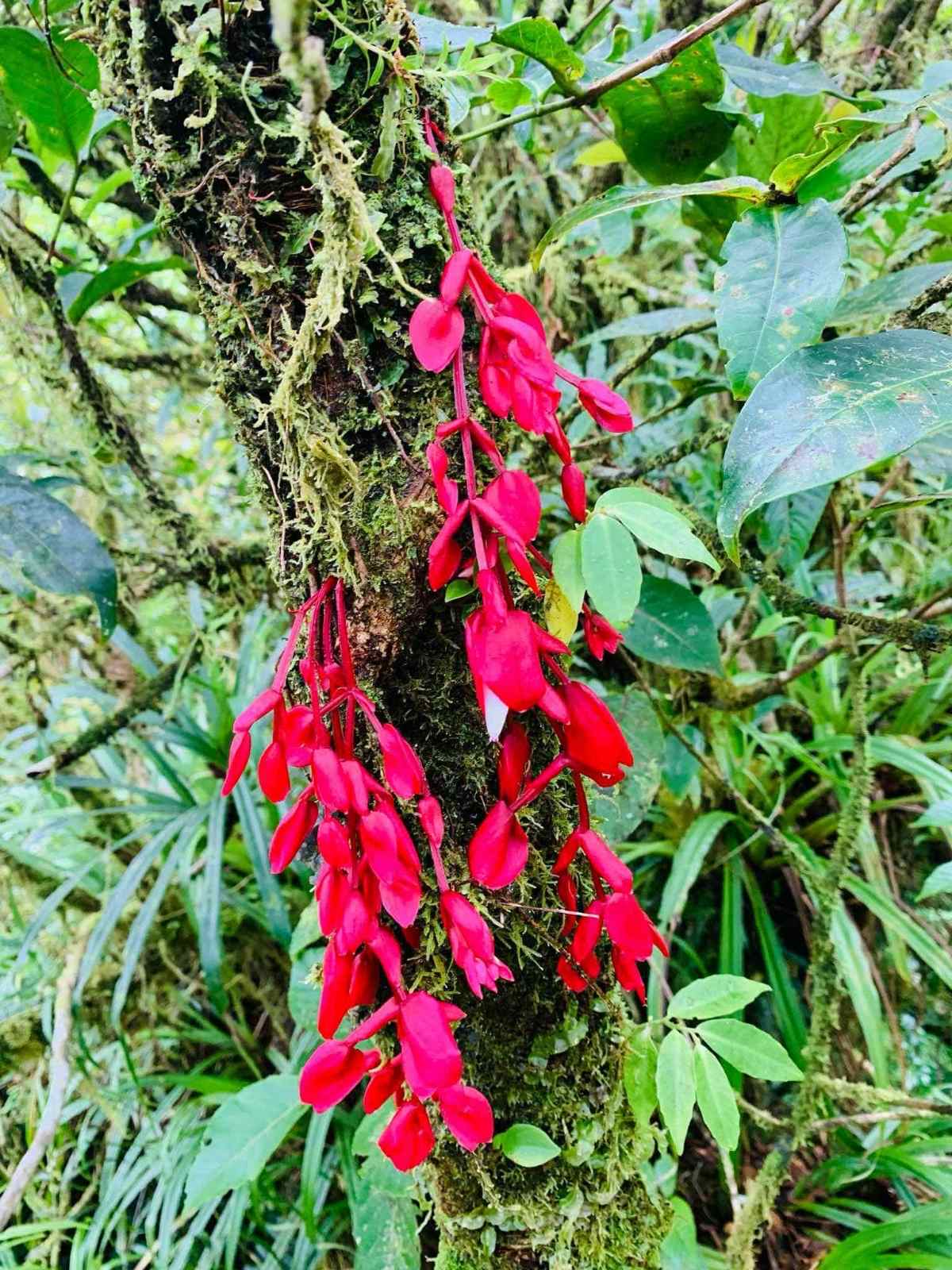
What makes Taveuni truly special to botanists and conservationists is its endemic species – plants found nowhere else on Earth. The most famous of these is the Tagimouica flower (Medinilla waterhousei), Fiji’s national flower. This striking red and white bloom grows only in the cloud forest on the slopes of Lake Tagimoucia, at elevations above 800 meters.
According to Fijian legend, the Tagimoucia flowers bloomed from the tears of a young woman who fled into the mountains after her father forbade her from marrying her true love. Whether you believe the legend or not, there’s no denying the flower’s ethereal beauty. It blooms between October and December, drawing visitors who make the challenging trek to Lake Tagimoucia, hoping to glimpse these rare flowers in their only natural habitat.
Beyond the Tagimoucia, Taveuni hosts numerous other endemic plant species. The island’s isolation and varied terrain have allowed unique evolutionary paths to unfold, resulting in plants that have adapted to very specific niches. Scientists continue to discover new species in Taveuni’s remote highlands, suggesting that much remains unknown about the island’s botanical diversity.
Avian Wonders
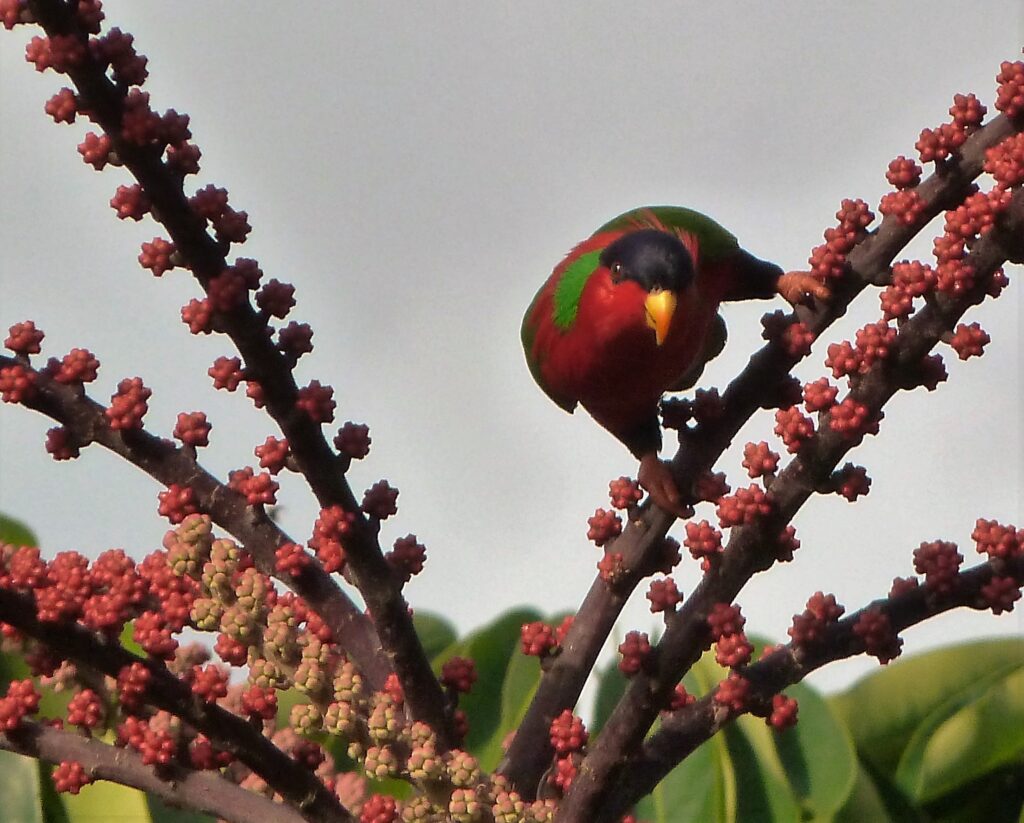
Taveuni is a paradise for birdwatchers, hosting several of Fiji’s most spectacular endemic birds. The silk tail (Lamprolia victoriae) is perhaps the most sought-after sighting. This small, exquisite bird with its iridescent plumage was thought to be related to Old World flycatchers but is now recognized as belonging to its own endemic family, found only in Fiji.
The orange dove (Ptilinopus victor) is another jewel of Taveuni’s forests. Males display vibrant orange plummage that seems almost to glow in the forest’s dim light, while females sport a more subdued olive green. These fruit doves play a crucial role in seed dispersal, helping to maintain the health and diversity of the rainforest.
The Fiji shrikebill, Fiji barred-wing rail, and azure-crested flycatcher also call Taveuni home. Each species has adapted to specific niches within the forest ecosystem, from the ground-dwelling rails to the canopy-dwelling flycatchers. The diversity of bird calls creates a dawn chorus that’s been described as one of the Pacific’s most spectacular natural soundscapes.
The Underwater Garden
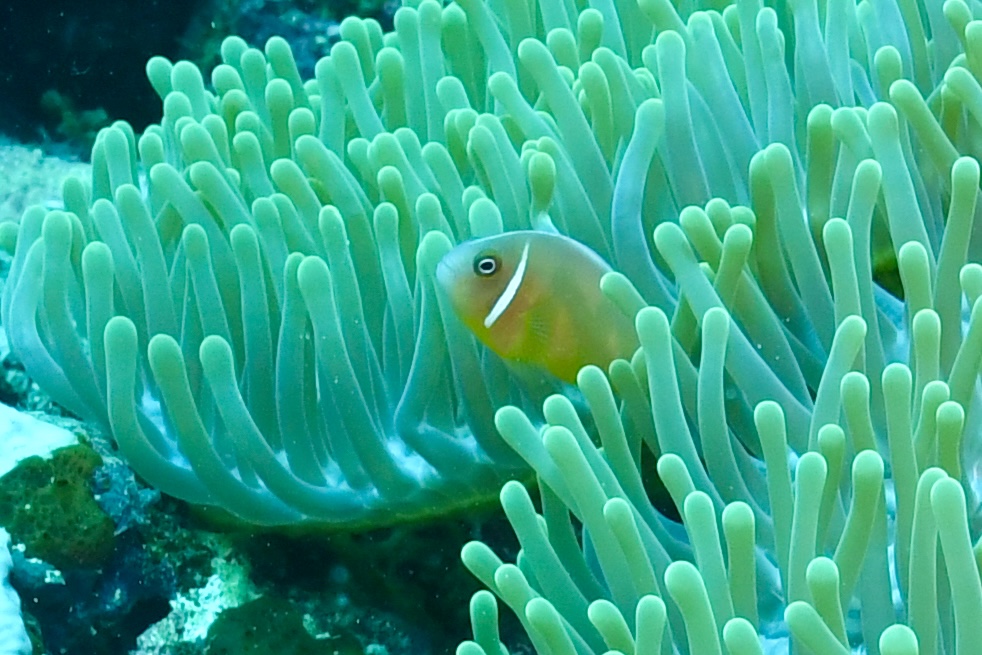
While Taveuni’s terrestrial ecosystems are remarkable, its marine environment is equally impressive. The Rainbow Reef and the Great White Wall, located in the Somosomo Strait between Taveuni and Vanua Levu, are considered among the world’s finest diving sites.
The reefs surrounding Taveuni support an astounding diversity of marine life. Soft corals in every colour imaginable create underwater gardens that justify the island’s nickname. These corals, unlike their hard coral cousins, sway in the currents like flowers in a breeze, creating a spectacle of movement and colour.
The reef ecosystem supports over 1,000 species of fish, from tiny, jewel-like anthias that hover in schools above the coral to massive Napoleon wrasse and reef sharks that patrol the drop-offs. Sea turtles, manta rays, and dolphins are regular visitors to Taveuni’s waters, while humpback whales pass through during their annual migration.
Conservation Challenges and Successes
Like many Pacific islands, Taveuni faces conservation challenges. Invasive species, particularly rats and mongooses introduced during the colonial era, have impacted ground-nesting birds and other native fauna. Climate change threatens both terrestrial and marine ecosystems, with coral bleaching events becoming more frequent and changing rainfall patterns affecting the rainforest’s delicate balance.
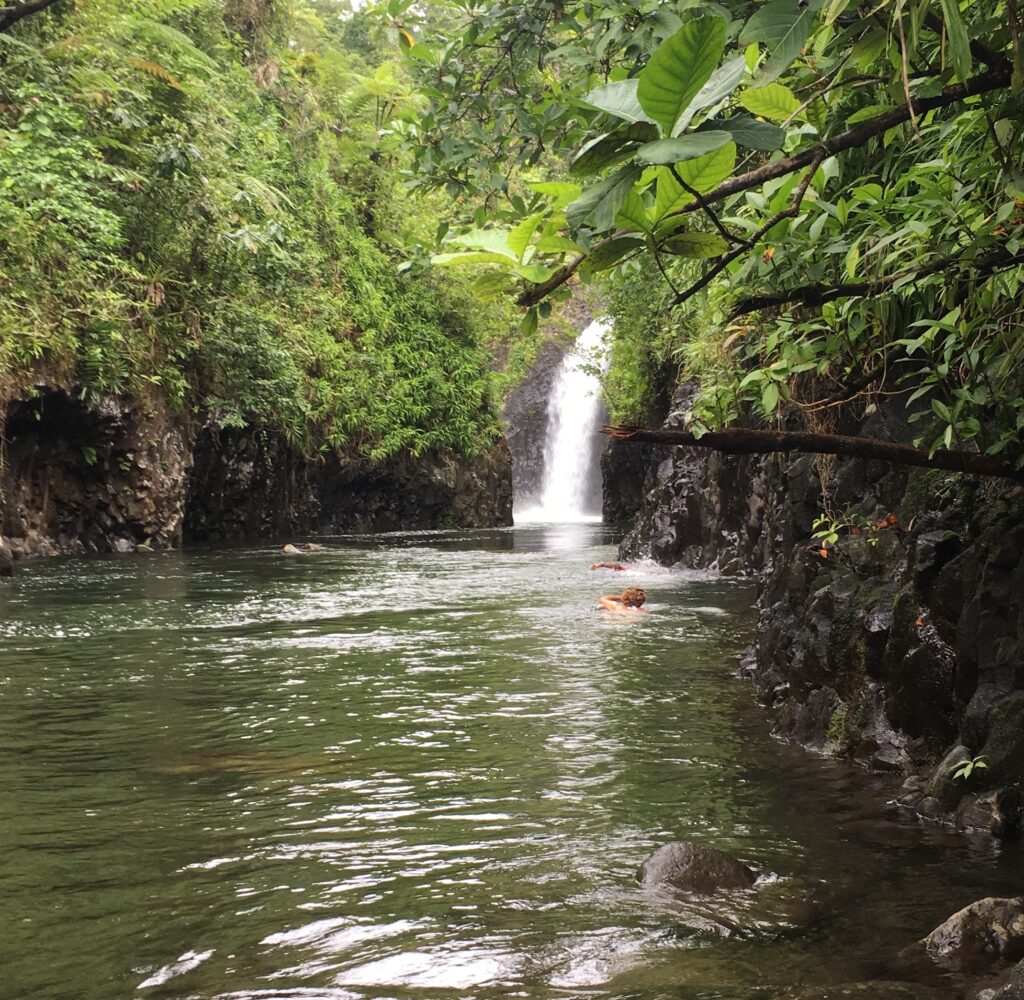
However, there are success stories. The Bouma National Heritage Park, which protects a large significant portion of Taveuni’s interior, represents a community-based conservation model that balances protection with local needs. The park is managed by local communities who have traditional rights to the land, ensuring that conservation efforts respect indigenous knowledge and provide economic benefits to residents.
Marine protected areas have been established around parts of the island, allowing fish populations to recover and corals to regenerate. These protected areas serve as nurseries, with juvenile fish spreading to adjacent areas and supporting both biodiversity and local fishing communities.
The Future of the Garden Island
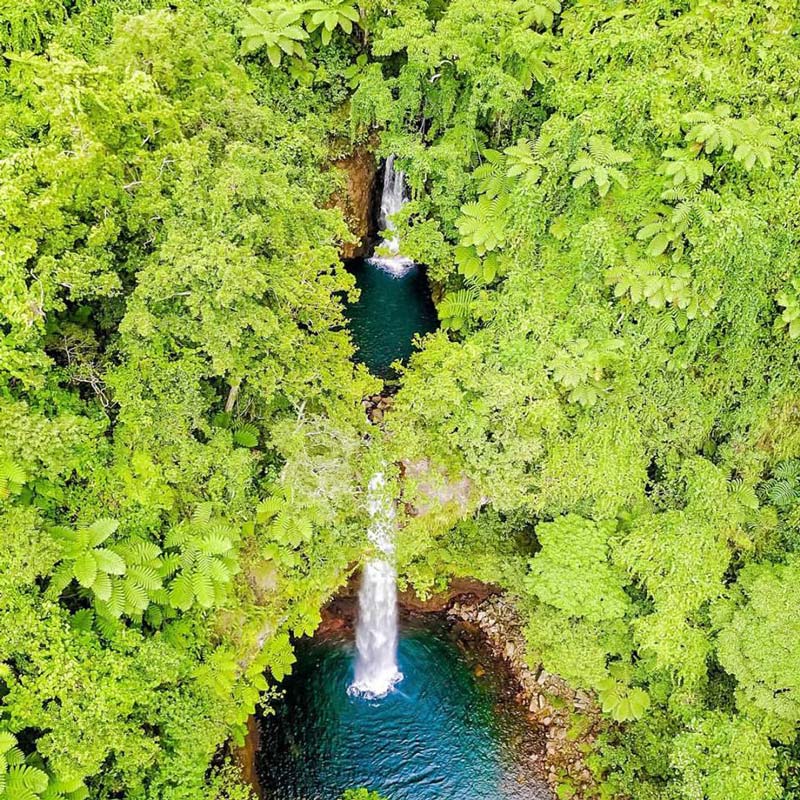
Taveuni stands at a crossroads. Its remarkable biodiversity makes it invaluable from both ecological and economic perspectives – ecotourism provides significant income for local communities. However, this same appeal creates pressure that, if not carefully managed, could damage the ecosystems that make the island special.
The challenge for Taveuni is to preserve its natural heritage while supporting its human communities. This requires balancing traditional land uses, modern economic needs, and conservation imperatives. It’s a complex equation, but one that communities across the island are actively working to solve.
For visitors, Taveuni offers a rare opportunity to experience relatively pristine tropical ecosystems. Whether you’re diving the Rainbow Reef, trekking to Lake Tagimoucia, or simply walking through the rainforest listening to the calls of endemic birds, you’re experienceing nature as it has existed for thousands of years.
Visiting Responsibly
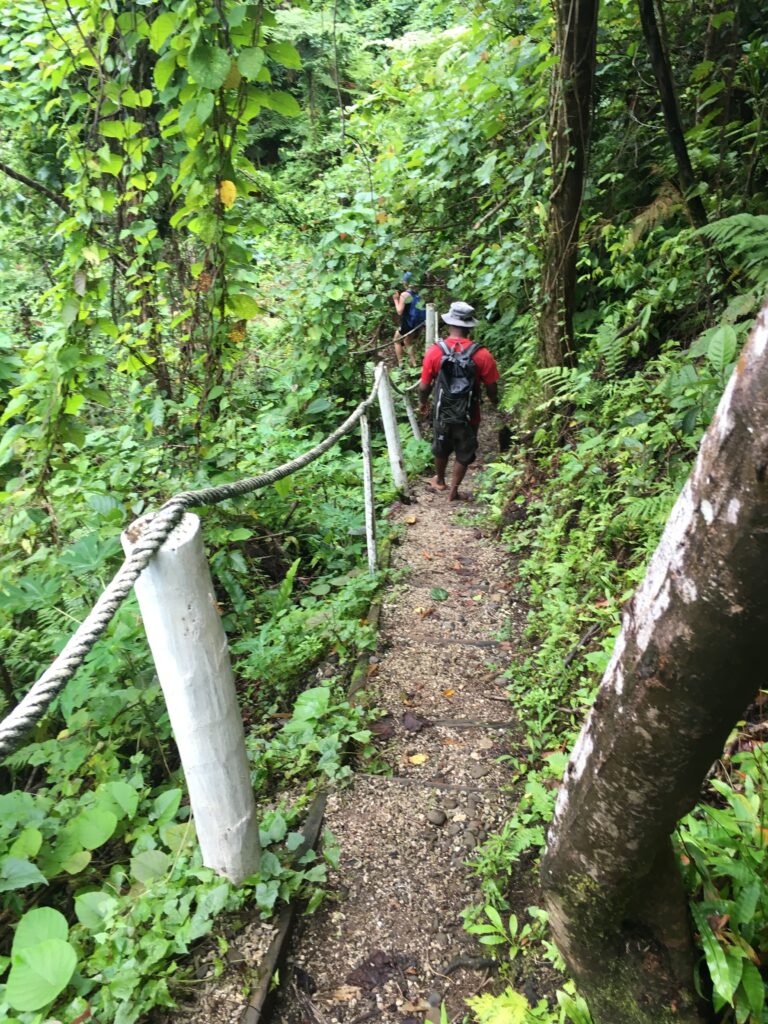
If you’re planning to visit Taveuni, consider yourself a temporary steward of this remarkable place. Stay on established trails to avoid damaging vegetation, never remove plants or animals, and support local conservation efforts through park fees and responsible tour operators. The Tagimoucia, in particular should never be picked – it’s protected by law and flowers rarely survive once removed from their native environment.
Choose tour operators who prioritise environmental protection and community benefit. Many of the best guides are local residents with deep traditional knowledge of the island’s ecosystems. Their insights add immeasurably to the experience while ensuring your visit supports the community.
Taveuni’s designation as the Garden Island isn’t just marketing – it’s a recognition of one of the Pacific’s most important repositories of biodiversity. In an age of rapid environmental change, places like Taveuni remind us of what we stand to lose and inspire us to protect what remains. The flora and fauna of this small volcanic island represent millions of years of evolution and adaptation. They’re not just Fiji’s heritage – they’re part of our shared natural legacy, worthy of protection for generations to come.